

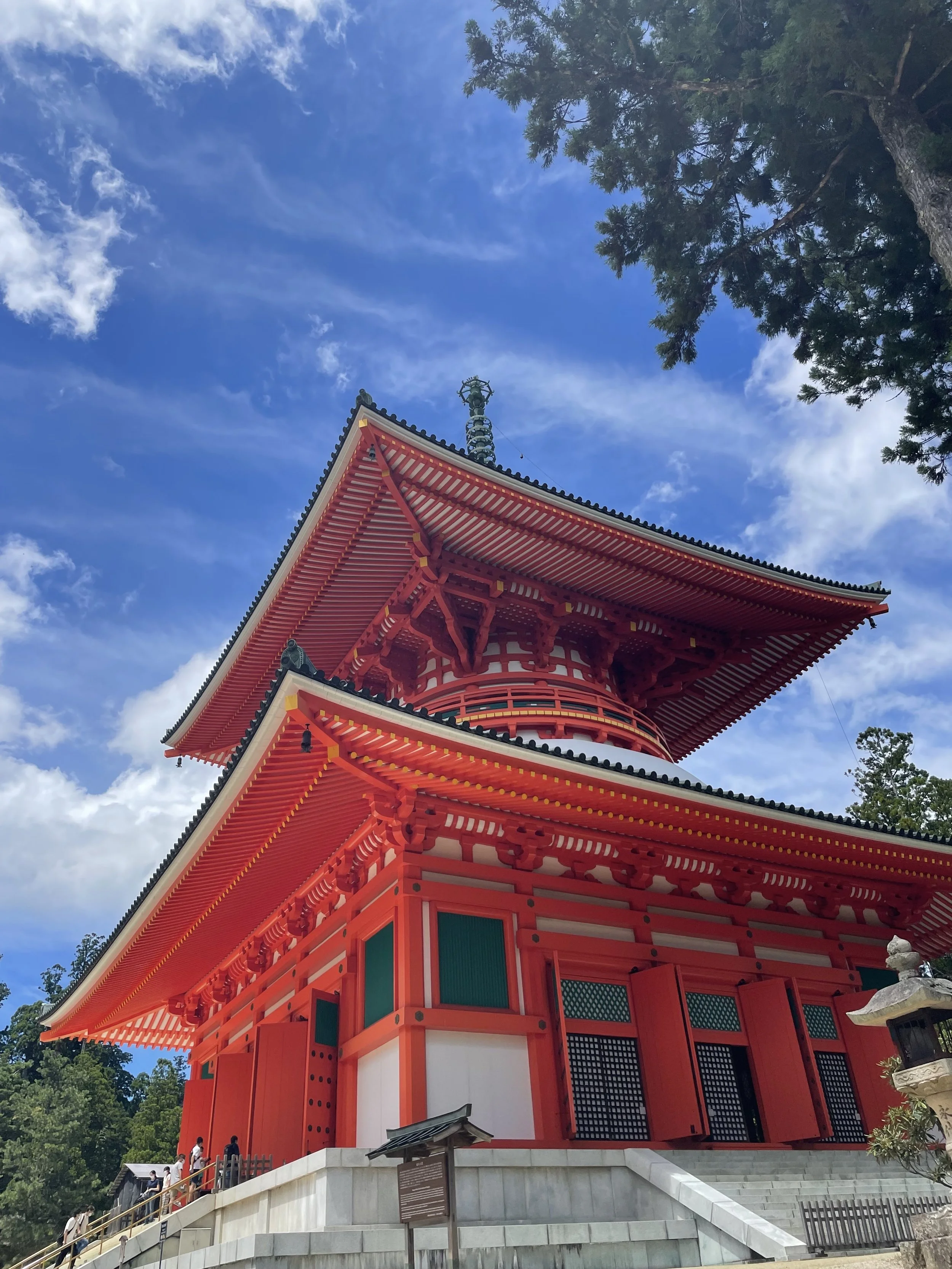
After Tokyo's neon and Osaka's non-stop eating, arriving in Kyoto feels like taking a long, slow breath.
The pace softens almost immediately. Temple bells replace traffic. Narrow stone lanes lined with wooden townhouses make you want to slow down. Even the walk to breakfast feels different here—as though the city is quietly asking you to notice the details.
Over four days, we wandered centuries-old temples, got lost in lantern-lit alleys, stood beneath swaying bamboo, and spent an unforgettable night in a Buddhist temple on Mount Koya (Koyasan), waking before dawn to the sound of monks chanting. This is a city where a 1,000-year-old temple gate stands next to a vending machine, and a Zen garden hides behind a coffee shop.
If you want historic temples, traditional culture, incredible food, and genuinely cinematic scenery in one trip, this Kyoto and Mount Koya fi-tinerary is one of Japan's most rewarding routes. (And yes, I over-planned it, so you don't have to.)
Day 1: Kyoto
🚗 Getting around: East to west across the city. Kiyomizu-dera → Gion on foot (20 min) → subway/taxi downtown for lunch → bus to Kinkaku-ji (~40 min) → walk to Ryoan-ji (~20 min) → Randen tram to Arashiyama (~25 min) → JR Sagano Line back to Kyoto Station (~15 min).
We started at Kiyomizu-dera, a UNESCO World Heritage Site perched on Kyoto's eastern hills—and the walk up is half the experience. Stone-paved lanes wind past tea houses, ceramic workshops, and stalls selling matcha sweets and freshly grilled rice crackers, while incense drifts through the air.
Then the view opens up. The temple's famous wooden stage juts out over the valley, with Kyoto's rooftops and distant mountains spread out below. What surprised me most wasn't the view—it was the hush. Even at one of Kyoto's busiest sights, conversations got quieter, and people lingered longer.
From there, we wandered downhill into Gion, Kyoto's famous geisha district. Narrow cobblestone lanes weave between wooden machiya townhouses, paper lanterns sway outside tea houses, and every corner feels frozen in time. Gion isn't about ticking off sights—it's about soaking up the atmosphere.
💡 Pro Tip: Stick to public streets like Hanamikoji. Many of Gion's side alleys are private, and signs warn of a ¥10,000 fine for entering them or photographing geiko and maiko without permission.
A short hop downtown (a 4-minute walk from Karasuma-Oike subway station), Yakitori Kushikura serves charcoal-grilled skewers inside a 100-year-old machiya with floor seating and a tiny interior garden.
🍢 What we ate:
🍢 Smoky charcoal-grilled chicken skewers
🍄 Mushroom skewers bursting with umami
🥬 Seasonal Kyoto vegetable skewers
🍶 Kyoto sake pairings
Everything was deceptively simple yet incredibly refined—Kyoto's food philosophy on a stick.
The afternoon showed us two completely different sides of Kyoto.
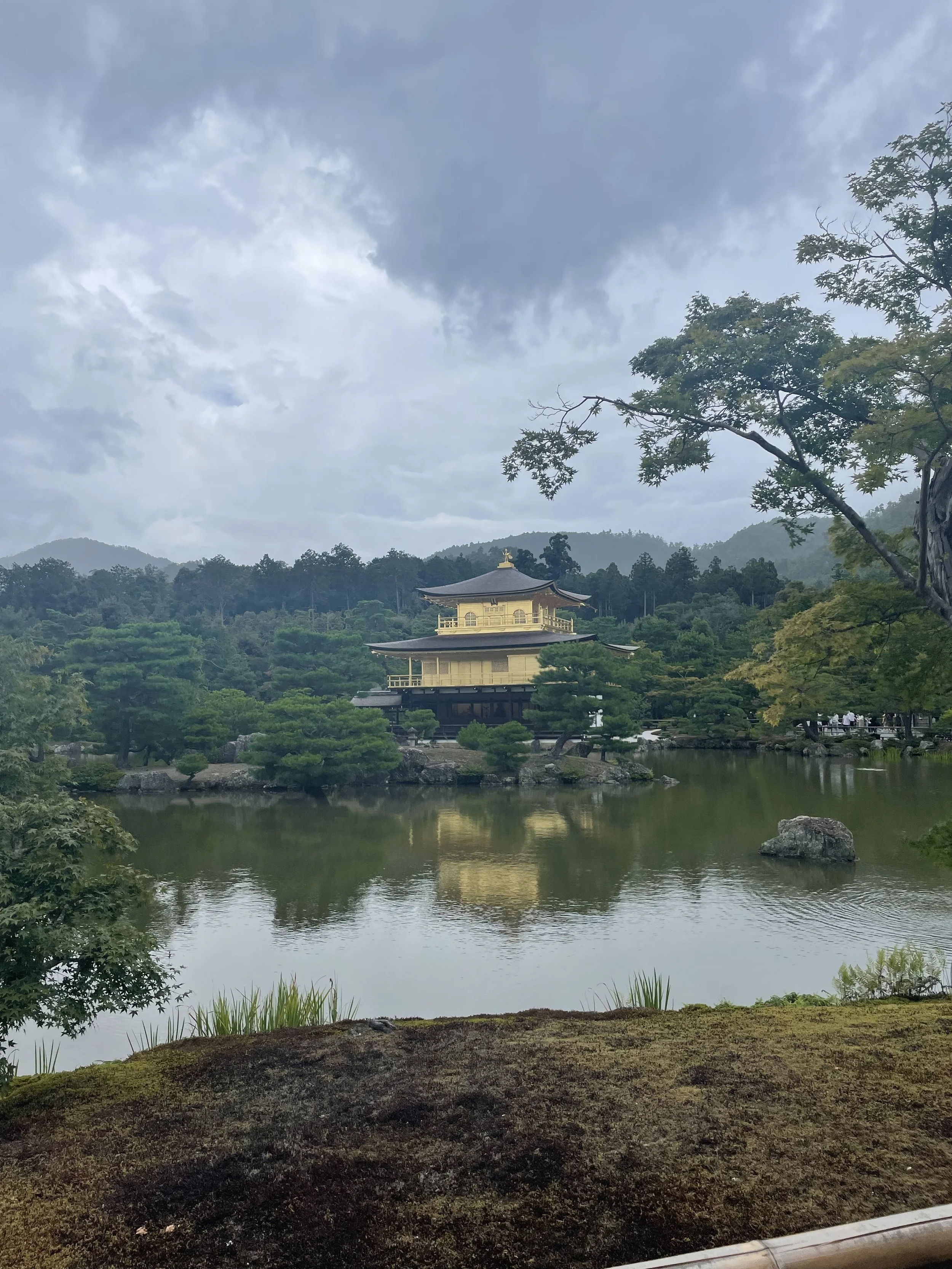
First, Kinkaku-ji, the Golden Pavilion. Covered in gold leaf and mirrored perfectly in its pond, it almost looks unreal, shifting in tone as clouds drift overhead.
Twenty minutes' walk away, Ryoan-ji strips everything back. Its Zen rock garden holds just fifteen stones on raked white gravel. No explanation. No interpretation. You simply sit and observe. Gold and gravel, grandeur and stillness—it's Kyoto in a single afternoon.
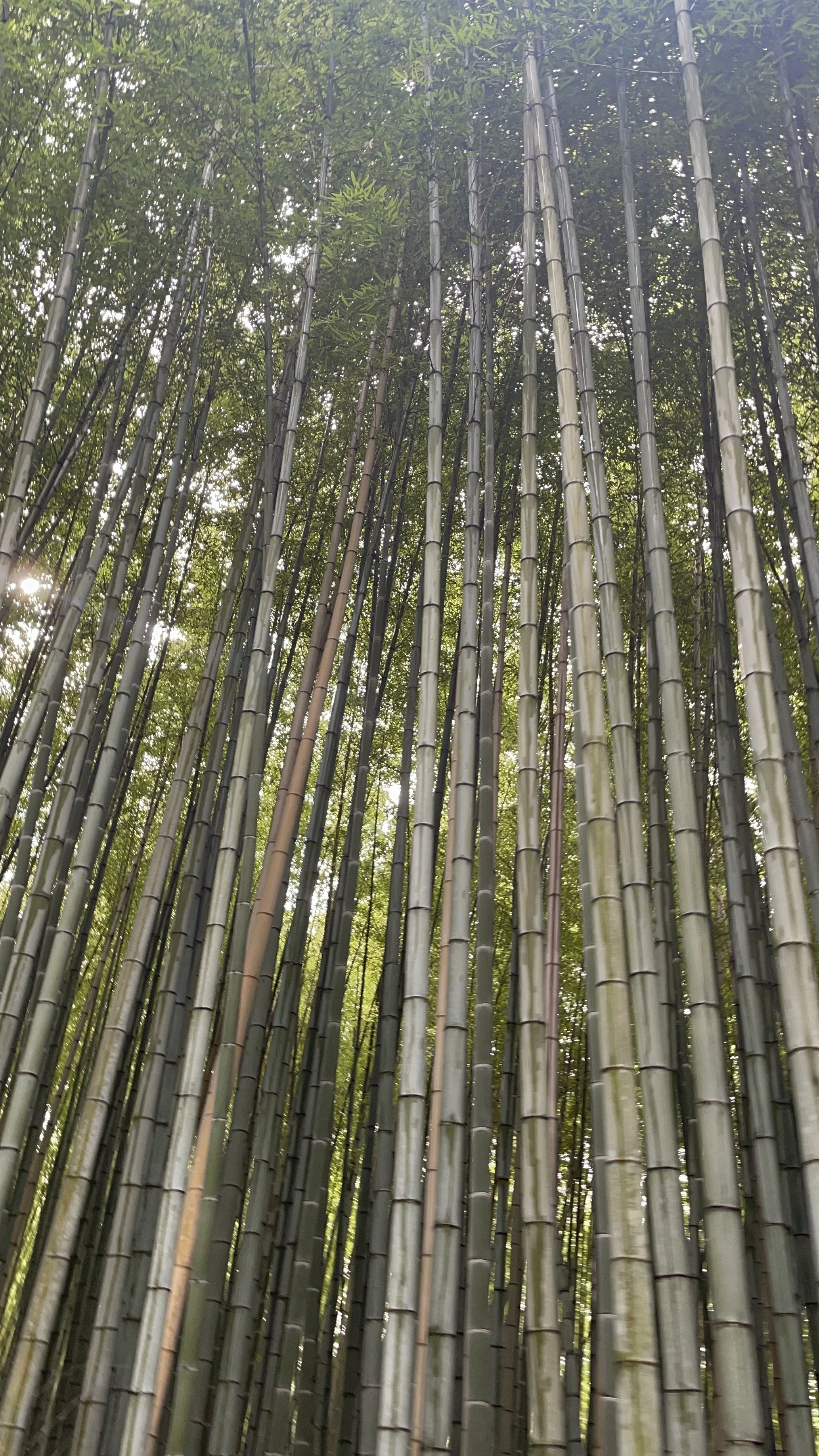
As the light softened, we headed west to Arashiyama and stepped into the Sagano Bamboo Forest. Towering green stalks filtered the sun into shifting patterns on the path, and the creak of bamboo in the breeze was the only soundtrack. Photos never quite capture it.
We ended the day back at Hotel Elcient Kyoto Hachijoguchi, a two-minute walk from Kyoto Station—ideal for tomorrow's early start.
Day 2: Mount Koya
🚗 Getting there: Allow about 2.5 hours from Kyoto. Take the JR to Osaka, then the Nankai Koya Line from Namba to Gokurakubashi, the 5-minute cable car up the mountain, and a local bus into town.
The journey to Mount Koya feels like traveling back in time. Trains give way to a mountain railway, then a steep cable car through dense cedar forest. Mist drifts between the trees. Temple roofs emerge from the fog. By the time we arrived, the modern world felt very far away.
💡 Pro Tip: Treat yourself to the GRAN Tenku, Nankai's sightseeing train between Namba and Gokurakubashi, launched in April 2026—it turns the ride up into part of the trip. Or grab the Koyasan World Heritage Ticket, which bundles the train, cable car, and mountain buses.
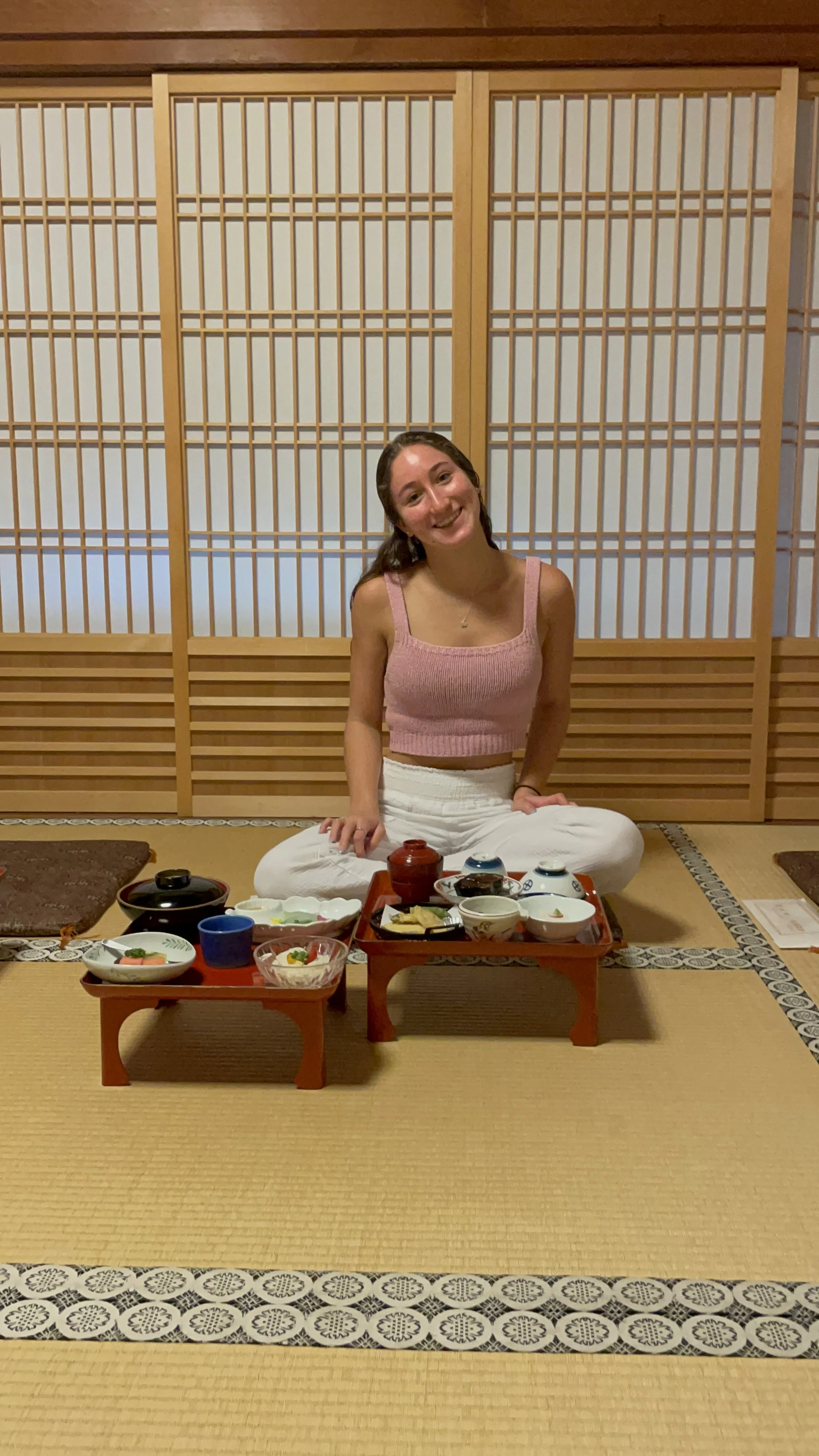
The highlight of our whole Japan fi-tinerary was a night at a traditional Buddhist temple lodging. Tatami floors. Sliding paper doors filtering soft afternoon light—futons instead of beds. Luxury here isn't measured in amenities—it's measured in peace.
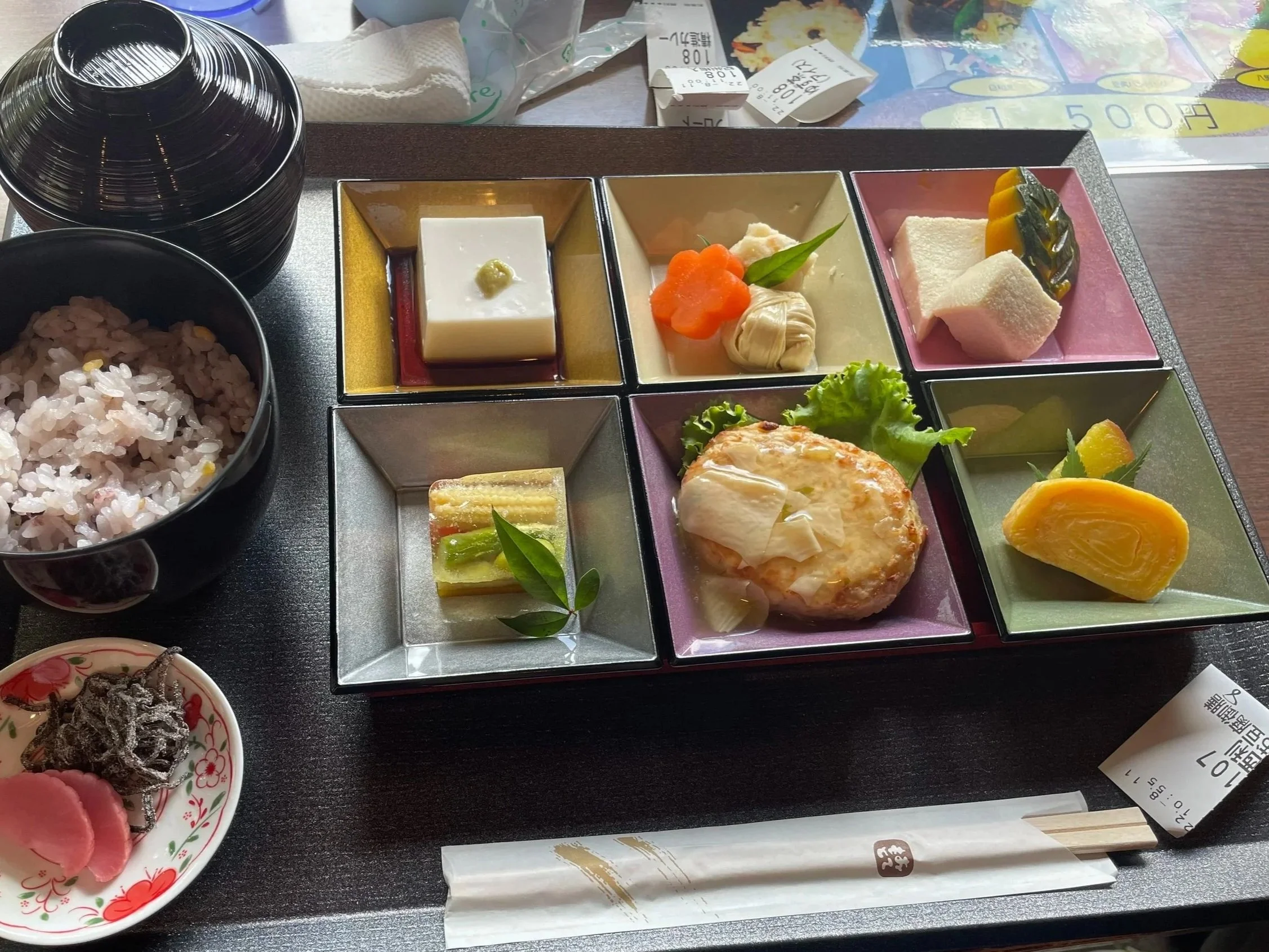
That evening, we sat down to shojin ryori, the vegetarian cuisine prepared by the monks.
🍱 Temple dinner highlights:
🥢 Handmade sesame tofu
🥬 Seasonal mountain vegetables
🍄 Delicate mushroom dishes
🍚 Local rice and miso soup
Every dish reflected Buddhist ideas of balance, simplicity, and mindfulness—and it was one of the trip's most memorable meals.
Day 3: Mount Koya
Before dawn, temple bells echoed through the mountain air, and we quietly joined the monks for morning prayers. Ancient chants rolled through the wooden hall while the forest outside stayed wrapped in darkness. For nearly an hour, nobody checked a phone. Nobody spoke. Everyone simply listened.
💡 Pro Tip: Resist the urge to film the ceremony. It's far more meaningful when you're fully present.
Before leaving the mountain, we walked through Okunoin, one of Japan's most sacred places. The path winds about 2km through ancient cedars lined with thousands of moss-covered gravestones and stone lanterns. The deeper we walked, the quieter everything became. It didn't feel somber—it felt peaceful, spiritual, and timeless.
💡 Pro Tip: Photography is banned beyond Gobyo Bridge, where you'll be asked to remove your hat. The temple also asks visitors to cover their shoulders and avoid revealing clothing.
Back near Kyoto, we swapped mountain silence for Fushimi, a district that has brewed sake for centuries thanks to its exceptionally pure groundwater. Traditional breweries line quiet canals, and the faint scent of fermenting rice drifts through the air.
🚗 Getting there: Bus to Okunoin, then the cable car and Nankai line back to Osaka, and the Keihan line to Fushimi-Momoyama (allow about 3 hours).
🍶 Sipping highlights:
🍶 Local sake tasting flights
🌾 A crash course in how rice polishing and water change each style
🏮 Canal-side strolls between brewery storehouses
Mount Koya's stillness to Fushimi's sensory indulgence, all in one day—this is Japan's range at its best.
Day 4: Kyoto
🚗 Getting around: Philosopher's Path on foot (about 30 min end to end) → Nanzen-ji (5-min walk from the southern end) → wander through Higashiyama → bus or taxi to Nishiki Market downtown.
For our final day, we skipped the headline sights. We started on the Philosopher's Path, a canal-side trail lined with cherry trees, small temples, and hidden cafés. No rush. No crowds. Just the sound of water.
At its southern end, Nanzen-ji is one of Kyoto's most impressive yet overlooked temple complexes. Massive wooden gates tower over beautifully kept grounds, and quiet paths invite slow wandering.
We then meandered through Higashiyama, ducking into family-run shops, traditional tea houses, and tucked-away shrines.
We had lunch at Nishiki Market, nicknamed "Kyoto's Kitchen."
🍜 Nishiki Market highlights:
🍢 Fresh seafood skewers
🥟 Handmade dumplings
🍵 Matcha desserts
💡 Pro Tip: Don't eat while walking. The market asks you to eat in front of (or inside) the shop where you bought your food. Go around midday, when most stalls are open, and note that many close on Wednesdays or Sundays.
Travel Tips: Know Before You Go
🚆 Passes: The JR Pass doesn't cover the Nankai line to Koyasan. Buy the Koyasan World Heritage Ticket for that leg.
🏨 Where to stay: A base near Kyoto Station makes day trips and early departures easy.
🛏️ Temple stays: Book your shukubo well ahead, especially in autumn, and expect dinner and breakfast to be included.
🧥 What to wear: Modest layers for temples. Koyasan is noticeably colder than Kyoto, so pack an extra layer.
📸 Photo etiquette: Respect the no-photo zones in Gion's private alleys and at Okunoin.
Long after the golden temples, bamboo forests, and lantern-lit lanes faded behind us on the way back to Tokyo, what stayed with me was the atmosphere: incense drifting through temple courtyards, bamboo rustling in the wind, and monks chanting before sunrise on Mount Koya.
Kyoto may be Japan's cultural heart, but it's only one chapter. If you're planning a longer trip, add these to your list:
🏙️ Tokyo fi-tinerary: neon-lit neighborhoods, historic temples and endless city energy
♨️ Hakone fi-tinerary: hot springs, lake cruises and iconic views of Mount Fuji
🍜 Osaka fi-tinerary: street food, nightlife and the impressive Osaka Castle
